

For many residents, incontinence won’t be the only condition they are living with. While for others, their current condition can lead to incontinence. This article provides useful tips on how to care for residents experiencing urinary incontinence following a stroke. You will also find information on the different types of urinary incontinence stroke patients can experience and how it affects their daily lives.
Helping residents manage urinary incontinence following a stroke
Continence care tips for stroke survivors and questions answered
As well as hands-on continence care tips for stroke survivors, you can also find answers to frequently asked questions such as:
- How does a stroke contribute to urinary incontinence?
- Which types of urinary incontinence can occur after a stroke?
- Can continence be improved after a stroke?
- Which toileting aids can be used to support stroke survivors with incontinence?
- How to maintain skin health for stroke survivors with incontinence?
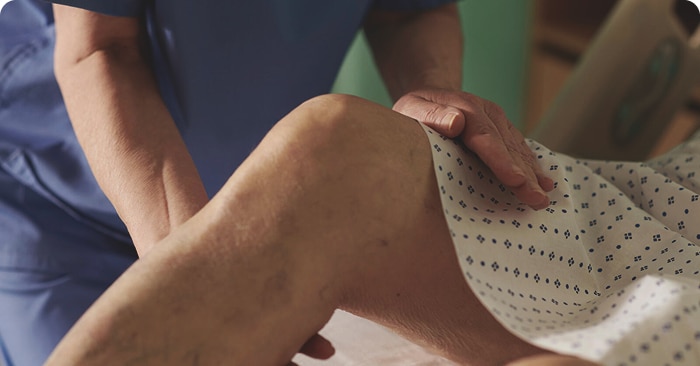
How does a stroke contribute to urinary incontinence?
Up to 79% of stroke survivors experience urinary incontinence in the early days and weeks following a stroke while 15% of stroke survivors continue to experience urinary incontinence even one year later. (1) The most common urinary symptoms experienced after a stroke include leakage, urgency, frequent urination, nighttime urination and difficulty voiding the bladder.
The likelihood and level of urinary incontinence depend on the severity of the stroke and whether the areas of the brain that control urination are damaged. Mobility issues, cognitive impairment, side effects of medication and obesity are also contributing risk factors for urinary incontinence.


Up to 79% of stroke survivors experience urinary incontinence. (1) But with the right care, continence can improve.
Can continence be improved after a stroke?
For stroke survivors, urinary incontinence has a significant impact on their daily lives. It interrupts sleep and daytime routines and affects physical and emotional wellbeing. It also often leads to depression. However, with time and the right care, continence often improves.
An interdisciplinary approach to post‑stroke urinary incontinence – combining occupational therapy to address environmental barriers and toileting strategies with physical therapy to improve mobility and pelvic floor function – is essential, as coordinated rehabilitation can often lead to significant improvement or resolution.
Simple tips to help manage urinary incontinence after a stroke
Here are some simple care tips to help manage and improve an individual’s urinary incontinence following a stroke. Once the type of incontinence has been diagnosed – sometimes with support from a urology team – it is important to put a structured continence care plan in place, supported by the right products and daily routines. Correctly identifying the type and level of incontinence is essential and should always begin with a comprehensive continence care assessment. The information provided by the assessment will help determine the right product type, correct size, and absorption level, and support the development of effective, individualised continence care plans.
*Required fields

Bladder training
Bladder training can help correct habits of frequent urination, control the urge to urinate, increase time between bathroom visits and expand bladder capacity. A voiding diary can help track toileting times, identify triggers and provide important information for care plans.
*Required fields

Pelvic floor exercises
Pelvic floor exercises are one of the most effective ways to improve continence. They strengthen the pelvic floor and can improve feelings of urgency, reduce nighttime urination and also improve or even eliminate stress incontinence.
*Required fields

Facilitate bladder emptying
For residents who have difficulty fully emptying the bladder, double or triple voiding techniques are recommended. Encourage the resident to sit and void normally. Once finished, help them stand and then sit down again to void any residual urine.
*Required fields

Timed or prompted voiding
Timed voiding at regular intervals – usually every three hours during the day – may effectively minimise or eliminate incontinence. With prompted voiding, caregivers remind and encourage residents to ask for help with toileting. By shortening the intervals between voiding, caregivers can help minimise incontinence and involuntary bladder contractions.
*Required fields

How to prevent functional incontinence
For residents with functional impairments such as impaired mobility, and/or impaired cognition, regular toileting assistance is essential. Ensure the bathroom is easily accessible while toileting aids such as grab bars and a raised toilet seat are also helpful. Residents’ clothing should be easy to take off and put back on.
*Required fields

How to prevent constipation and avoid making incontinence worse
Constipation can make incontinence worse. Ensuring residents eat enough fibre, stay hydrated and exercise regularly can all help prevent constipation. To facilitate bowel movement, ensure residents sit in a relaxed position when toileting. They should lean forward with knees above hips and elbows on knees. Provide foot support if needed.
*Required fields

Help manage fluid intake and maintain a healthy weight
To prevent needing to get up at night to urinate, try to avoid drinking 2-4 hours before going to bed and wear compression stockings during the day. Avoid or reduce caffeine as this stimulates the kidneys to produce urine and irritates the bladder. It is also important to ensure residents maintain a healthy weight as obesity increases the risk of incontinence.
*Required fields

Ensure perineal area stays clean and dry and avoid harsh soaps
Maintaining skin health is essential for preventing skin irritation and infection. Inspect skin daily, especially the groin and between skin folds. Avoid exposure to faeces and urine as much as possible and ensure the perineal area stays clean and dry. Use gentle cleansers rather than harsh soaps.
*Required fields
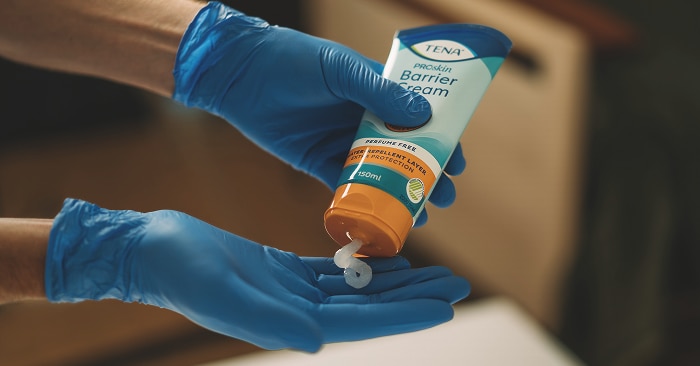
Use the right products and change at the right time
High-quality incontinence products with the right type, size and absorption level are essential for keeping skin dry and maintaining skin health. If the skin is sensitive or shows signs of inflammation, apply barrier cream or zinc cream for extra protection. Ensure regular toilet visits and ensure any incontinence products are changed when needed.
References:
- Agapiou E, Pyrgelis ES, Mavridis IN, Meliou M, Wimalachandra WSB. Bladder dysfunction following stroke: An updated review on diagnosis and management. Bladder. 2024;11(1):e21200005. doi:10.14440/bladder.2024.0012

With over 60 years of experience TENA is the world’s leading incontinence brand*. We offer a full range of absorbent products, skincare and digital health technology solutions that are tailored to the needs of individuals, their families and healthcare professionals.
With TENA, Essity is at the forefront of developing products and services that help improve dignity and the quality of people’s lives. We strive for sustainable continence care with better care and better products.
*Source: Euromonitor International Limited; Retail Adult Incontinence, all channels, RSP value sales, Tissue & Hygiene, 2024 edition.






TENA, a brand of Essity – a global leading hygiene and healthy company. Everyday, our products, solutions and services are used by billion people around the world. Our purpose is to break barriers to well-being for the benefit of consumers, patients, caregivers, customers and society. Sales are conducted in approximately 150 countries under the leading global brands TENA and Tork, and other strong brands such as Actimove, Cutimed, JOBST, Knix, Leukoplast, Libero, Libresse, Lotus, ModiBodi, Nosotras, Saba, Tempo, TOM Organic and Zewa. In 2025, Essity had net sales of approximately SEK 138bn (EUR 13bn) and employed 36,000 people. The Company's headquarters is located in Stockholm, Sweden and Essity is listed on Nasdaq Stockholm. More information at essity.com.